

Thailand, LAMSAMA — The Accreditation Agency for Higher Education in Natural and Formal Science (LAMSAMA) has taken a strategic step toward strengthening its global network through the implementation of an international accreditation pilot project with the Biology Study Program at Sakon Nakhon Rajabhat University (SNRU), Thailand. The initial visit took place on 17–18 November at SNRU Thailand.
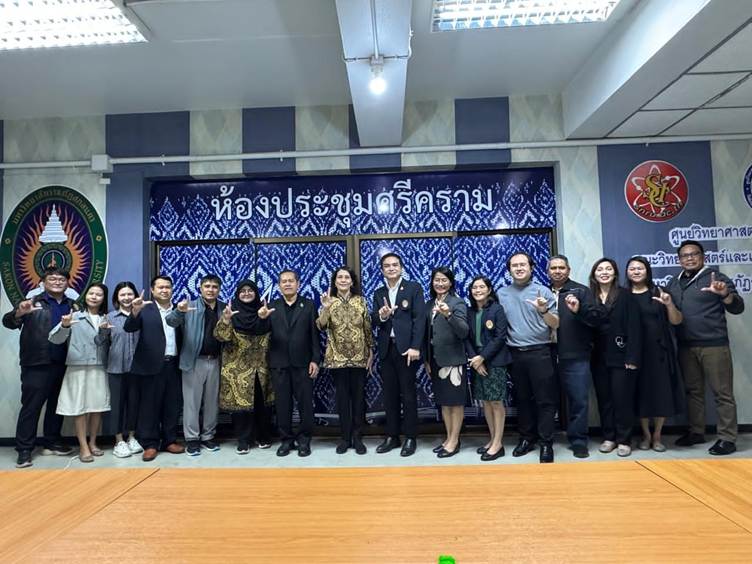
LAMSAMA and SNRU representatives during a group photo session
LAMSAMA was represented in person by Dr. Dra. Melania Suweni Muntini, M.T., Deputy Director for Resources and Cooperation, and Vinanda Hayuning Sukma, S.Si., LAMSAMA staff member. The delegation was welcomed by Prof. Tosawat Seetawan, Vice President of SNRU, along with other university officials. The two-day activity focused on introducing LAMSAMA’s accreditation mechanism as the initial step in cross-border accreditation collaboration.
On the first day, the discussion was led by the Dean of the Faculty of Science and Technology at SNRU, Assist. Prof. Dr. Prawit Suwannarong. The material session was opened by Dr. Melania, who delivered an in-depth explanation of how to prepare a Self-Assessment Report (SAR). She emphasized that the SAR is the primary document demonstrating compliance with accreditation criteria and must include a comprehensive analysis of strengths, weaknesses, opportunities, and challenges (SWOC).
“The SAR reflects the internal quality of a study program. It is not only a report but also a strategic analysis that shows the institution’s readiness to meet international standards,” said Dr. Melania.
The next session was conducted in hybrid format via Zoom and was led by Prof. Roto, Deputy Director for Accreditation. He explained the five main accreditation criteria used by LAMSAMA, namely Governance and Quality Assurance, Education, Research, Outcomes, and Development, all of which are detailed within the SAR document.
“LAMSAMA’s accreditation standards are designed to promote accountable governance as well as continuous improvement of academic quality,” said Prof. Roto.
LAMSAMA also provided a demonstration of its accreditation application system. This session covered the creation of study program accounts, uploading supporting documents, administrative and financial completeness, and the finalization process of documents within the system.
On the second day, the LAMSAMA delegation visited the Biology Study Program Laboratory, Faculty of Science and Technology at SNRU. This inspection aimed to evaluate the readiness of laboratory facilities as part of fulfilling international accreditation standards, as laboratories are an essential component in assessing the quality of educational implementation.
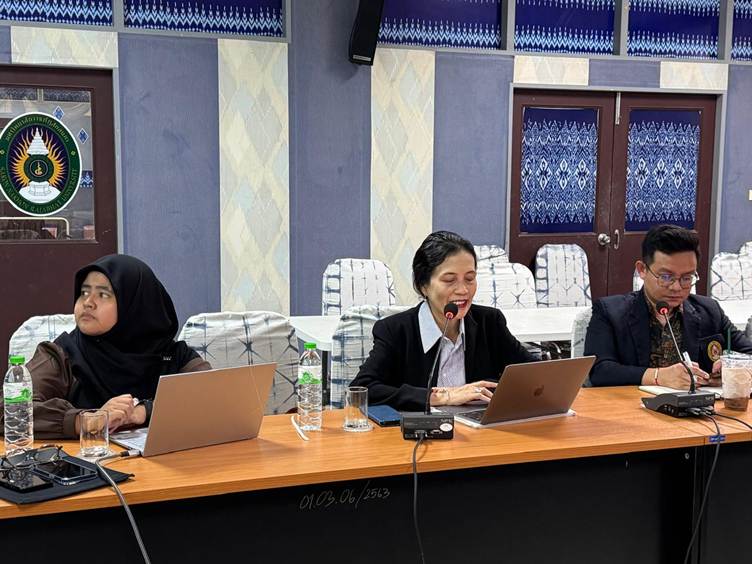
Dr. Melania presenting her material to the Biology Study Program at SNRU.
The activity concluded with a follow-up discussion regarding the preparation of documents, estimated accreditation timeline, drafting of an MoU, and options for strengthening supporting documents as part of the cross-border collaboration process.
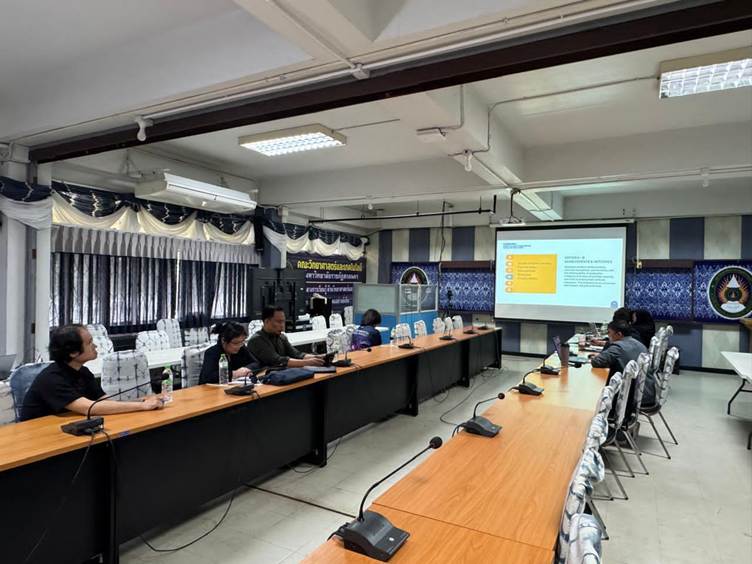
Meeting atmosphere at the Biology Study Program, SNRU
Through this pilot project, LAMSAMA aims to expand its role in the international accreditation system while supporting the improvement of higher education quality in the Southeast Asian region. The collaboration with SNRU is expected to be the starting point for broader and more sustainable cooperation in developing high-quality, globally recognized accreditation standards.