

Depok, LAMSAMA — The Independent Accreditation Agency for Natural Sciences and Formal Sciences (LAMSAMA) conducted accreditation assessments in 2023–2024 for study programs in the fields of natural and formal sciences. Over the two-year evaluation period, LAMSAMA issued 357 accreditations for Diploma, Applied Bachelor, Bachelor, Master’s, and Doctoral programs across 89 regencies/cities.
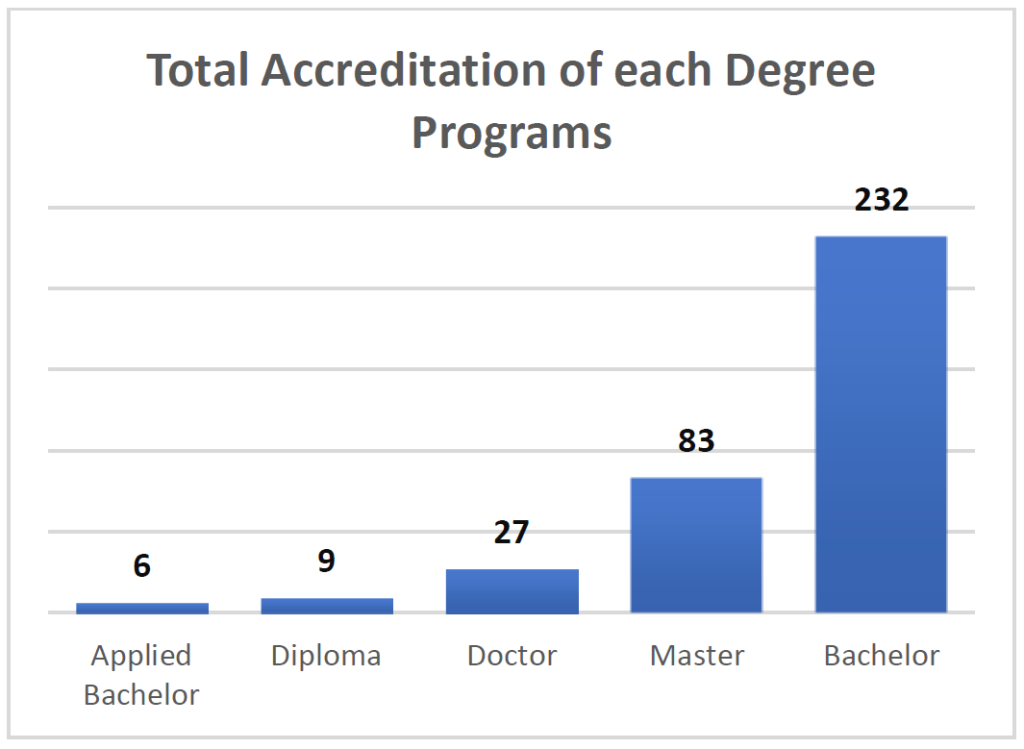
Data shows that Bachelor’s programs dominated the number of accreditations with a total of 232 programs, followed by Master’s programs with 83, Doctoral programs with 27, Diploma programs with 9, and Applied Bachelor programs with 6.
Total Accreditation Rating
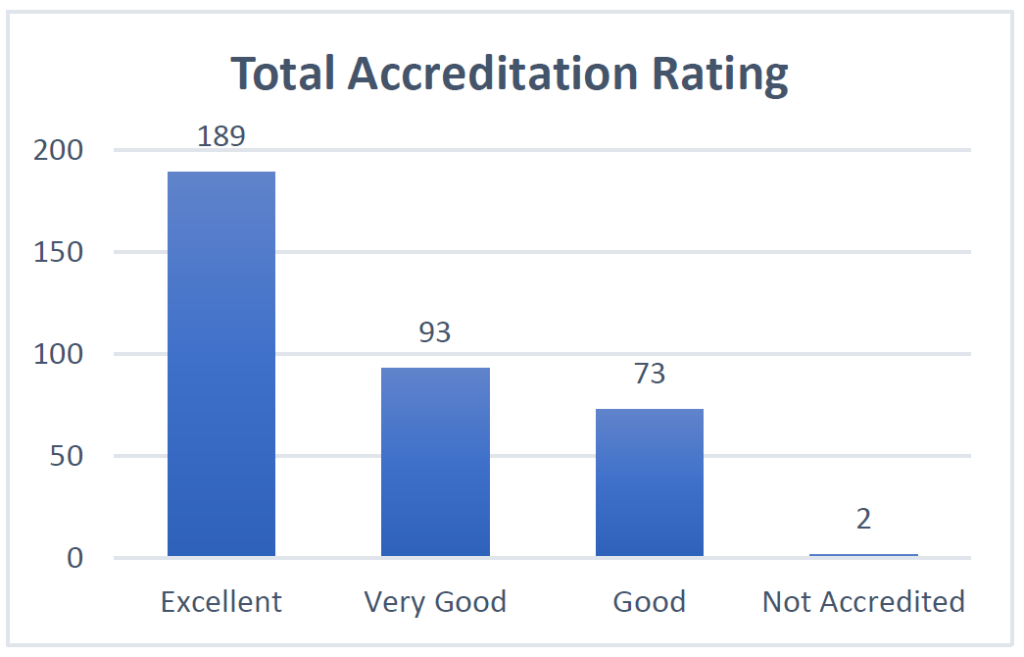
Of all accredited programs, 189 received an “Excellent” rating, 93 were rated “Very Good,” and 73 obtained a “Good” rating. Only two study programs were recorded as not meeting the minimum threshold.
Accreditation Ratings of Study Programs
The Executive Board Director of LAMSAMA, Prof. Dr.-Ing. Drs. Ir. Mitra Djamal, IPU., ASEAN Eng., stated that these achievements reflect universities’ commitment to improving academic standards. “The accreditation trends over the past two years show significant progress, especially in universities’ consistency in maintaining quality,” he said.
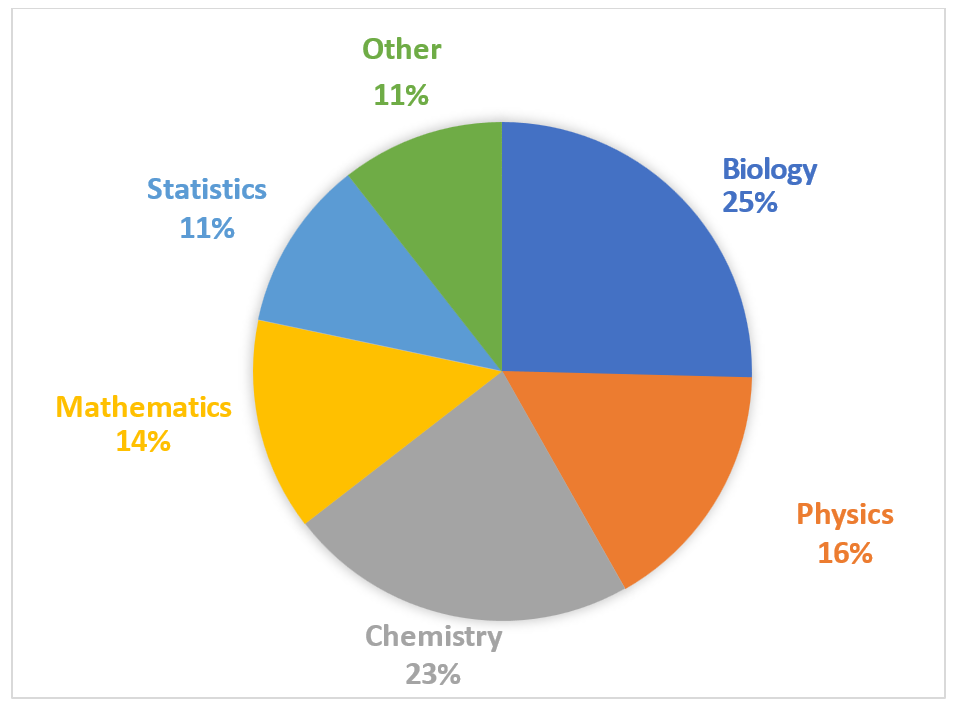
At the scientific field level, Biology programs recorded the highest proportion of “Excellent” ratings, contributing 25 percent of the total in that category. Chemistry, Physics, Mathematics, as well as Statistics and Actuarial Science also demonstrated strong performance, while other fields contributed 11 percent. Overall, this trend indicates that the fundamental sciences remain the main pillars of quality improvement in the fields assessed by LAMSAMA.
Percentage of Fields with “Excellent” Ratings
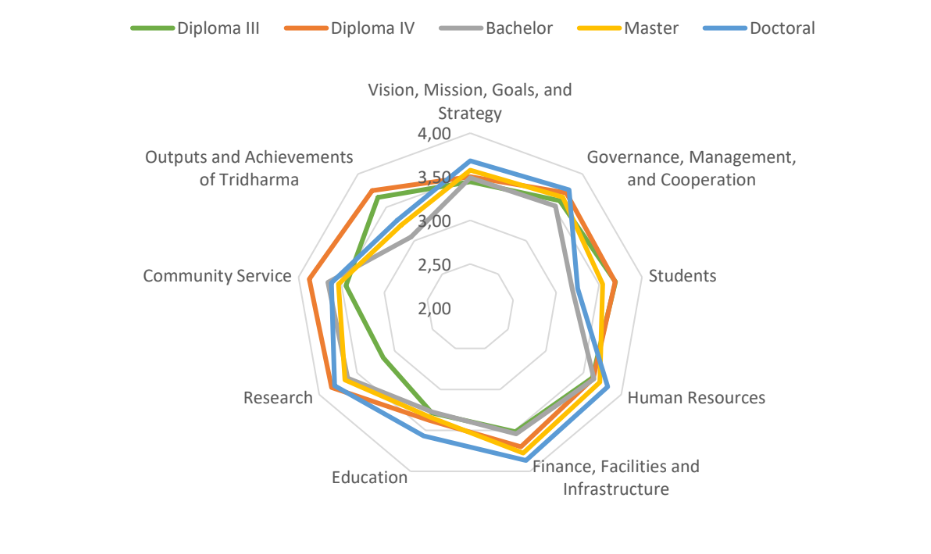
Analysis of 332 study programs assessed using nine accreditation criteria also revealed interesting patterns across education levels. Diploma III programs scored highest in the Student category but were weaker in research. Diploma IV excelled in Community Service. Bachelor programs faced challenges in outputs and tridharma achievements, while Master’s programs demonstrated strong performance in Education. Doctoral programs achieved the highest scores in Finance, Facilities, and Infrastructure, but still need to strengthen academic support for students.
Degree Programs’ Scores of Each Criteria
Bachelor Program Scores for Each Criterion
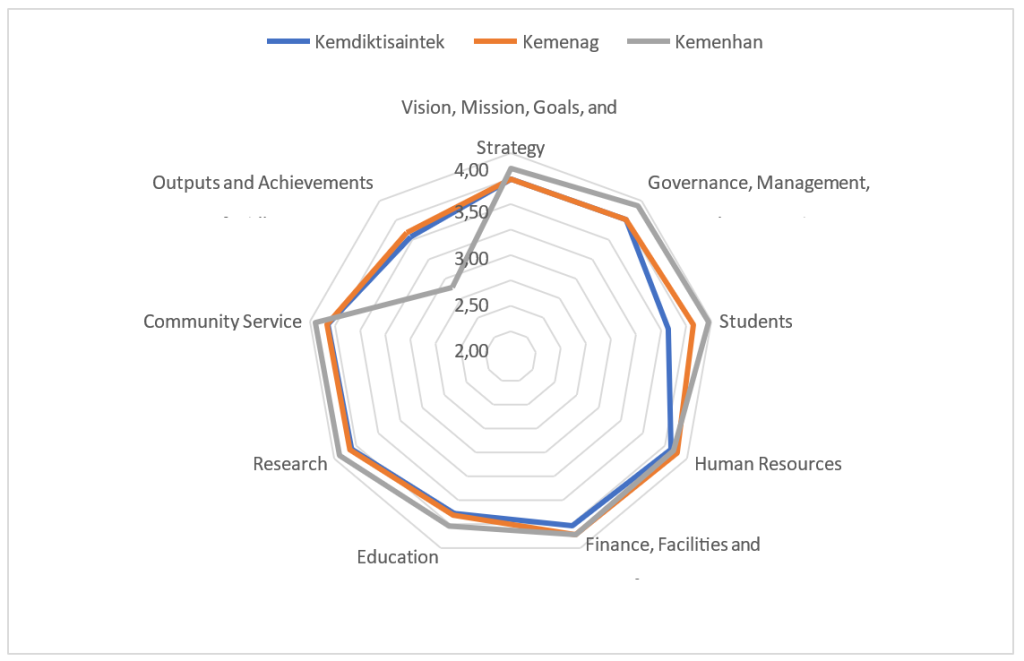
Analysis based on supervisory ministries showed that universities under the Ministry of Defense scored the highest in the Student and Community Service categories, while the Ministry of Religious Affairs excelled in human resource quality and facilities. Meanwhile, universities under the Ministry of Education, Culture, Research, and Technology showed strengths in research.
LAMSAMA Deputy Director of Accreditation, Prof. Drs. Roto, M.Eng., Ph.D., emphasized that gaps in tridharma achievements remain a common challenge. “These findings provide direction for future improvement. All parties must consistently strengthen tridharma performance,” he explained.
As part of the evaluation, LAMSAMA delivered several key recommendations to strengthen study program quality. In the vision and mission aspect, universities are encouraged to update the scientific direction of their study programs and ensure goal achievement through measurable indicators. In terms of governance, consistent implementation of the PPEPP cycle and alignment of strategic planning documents at the university, faculty, and study program levels are crucial points of attention.
In the aspect of human resources, LAMSAMA highlighted the need to increase the number of lecturers, strengthen staff competencies, and accelerate academic career progression. In the long term, increasing doctoral qualifications, academic regeneration, and involving industry practitioners are key strategies to support graduate quality.
The 2023–2024 accreditation results reaffirm LAMSAMA’s commitment to maintaining the quality of Indonesian higher education through an objective and sustainable evaluation process.
“Accreditation is an important instrument to ensure that every study program continues to grow,” said Prof. Mitra.
Echoing this, Prof. Roto added that LAMSAMA will continue to work with all universities to ensure sustainable and measurable quality improvement.