

Depok, LAMSAMA — The Independent Accreditation Institution for Natural Sciences and Formal Sciences (LAMSAMA) held a staff upgrading program titled “Mental Health and Stress Management”, 18 December 2025, as part of its efforts to strengthen human resource capacity in responding to increasingly complex work demands. The program featured Dr. Arum Etikariena, M.Psi., Psychologist, a lecturer at the Faculty of Psychology, Universitas Indonesia, as the main speaker.
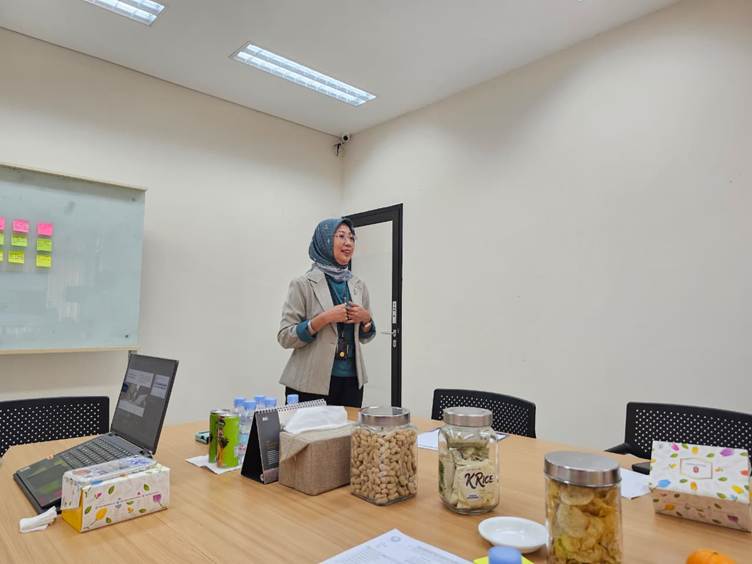
Dr. Arum Etikariena, M.Psi., Psychologist, delivering her presentation
The training was attended by LAMSAMA staff members and Dr. Dra. Melania Suweni Muntini, M.T., Vice Director for Resources and Cooperation at LAMSAMA. The session emphasized the importance of self-awareness in recognizing stress and anxiety, as well as the ability to choose healthy and adaptive coping strategies.
In her presentation, Dr. Arum Etikariena explained that stress is a natural response of the brain and body to pressure, demands, or threats—whether arising from external circumstances or from expectations we place on ourselves.
“Stress in moderate levels is actually necessary because it can enhance alertness and performance. However, stress becomes problematic when it lasts too long or exceeds our ability to cope with it,” she explained.
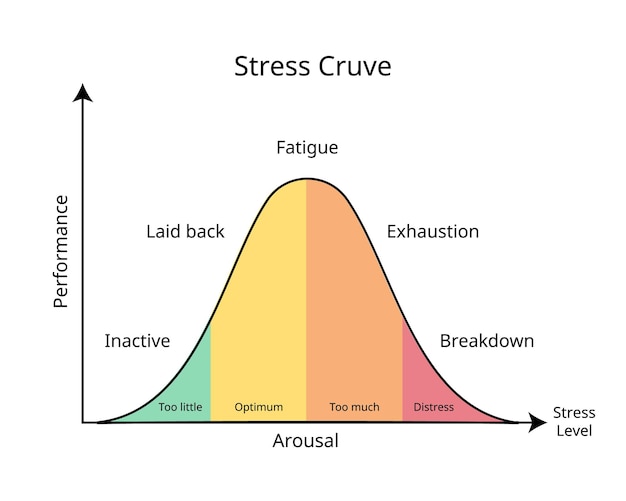
Dr. Arum also described the Yerkes–Dodson stress–performance curve, which illustrates that optimal performance occurs at a moderate level of stress. When demands are too low, individuals tend to become passive and unmotivated. Conversely, excessively high and prolonged demands can push individuals into a state of fatigue, increasing the risk of physical and mental health problems, including burnout.
The training materials covered various types of stress, including acute, episodic, and chronic stress, as well as the distinction between distress and eustress, or positive stress. Participants were encouraged to understand that different types of stress require different coping approaches, whether through emotion-focused coping strategies or problem-focused coping strategies. The core objective of these approaches is to calm and regulate the nervous system.
One of the main focuses of the session was the identification of anxiety. Dr. Arum explained common but often unnoticed signs of anxiety, such as persistent muscle tension, a constant state of high alert, difficulty relaxing, and worries about a future that has not yet occurred.
“Anxiety often appears as an unresolved fight-or-flight response. The body is prepared to fight or flee, but there is no immediate threat that can be resolved, resulting in feelings of helplessness, exhaustion, and thoughts such as ‘What if I fail?’,” she stated.
Furthermore, she emphasized that anxiety is not always negative. In its healthy or adaptive form, anxiety can serve as an important signal to prepare ourselves, be more cautious, and make more thoughtful decisions. “The issue is not whether anxiety exists, but whether we are able to recognize where we are and respond to it appropriately,” Dr. Arum added.
In her remarks, Dr. Dra. Melania Suweni Muntini, M.T. stated that the program reflects LAMSAMA’s commitment to maintaining organizational sustainability by prioritizing staff mental health. “We hope that through this training, all LAMSAMA staff will be better able to recognize their own conditions, manage stress in healthier ways, and ultimately work more optimally and sustainably,” she said.
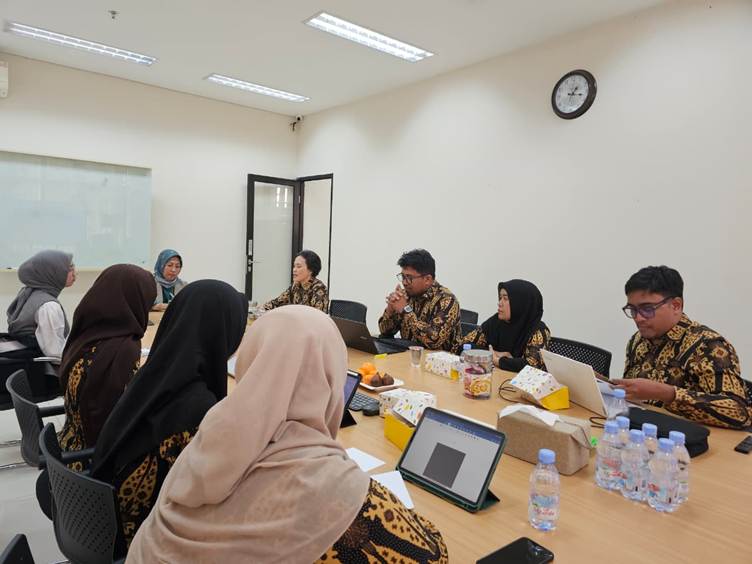
Atmosphere of the staff upgrading program
Echoing this sentiment, Dr. Arum Etikariena expressed her hope that the training would go beyond conceptual understanding. “I hope participants will begin to practice identifying stress and anxiety in their daily lives and develop greater self-compassion. In this way, stress is no longer an enemy, but a signal that we can manage,” she concluded.
Through this staff upgrading program, LAMSAMA reaffirmed the importance of mental health as a fundamental foundation for supporting professionalism, service quality, and organizational resilience amid the evolving dynamics of the modern workplace.
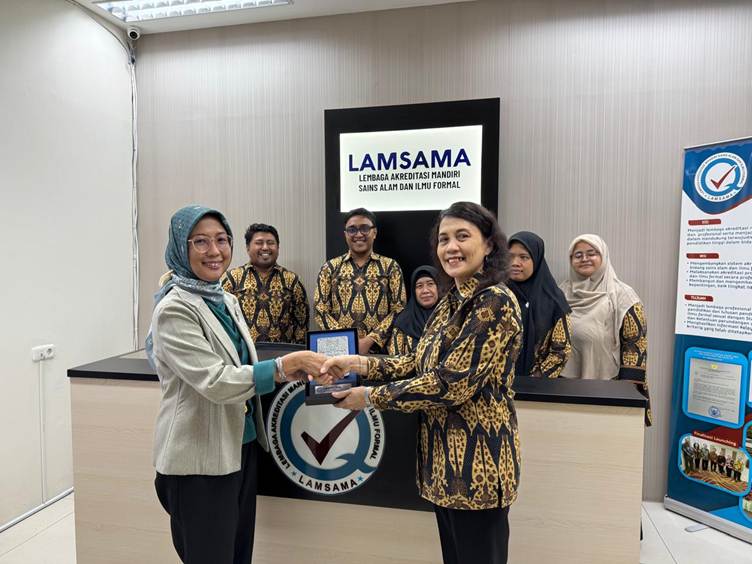
Presentation of a token of appreciation from LAMSAMA to the speaker